Transplants
One service stem cells perform for the public is explained below in the visual comparison chart from http://www.tcmremedy.com/uploads/allimg/101127/1_101127093352_1.jpg. As made clear in this chart, a stem cell transplant does not require finding a donor match, the survival rate is 100%, and both the traditional kidney transplant and the stem cell transplant cost the same. Perhaps the best difference between a donor transplant and a stem cell transplant, however, is that it does not require surgery. The stem cells are injected into the site of the diseased area and are sent to work on either making new healthy cells or repairing damaged cells. The stem cell transplant is "quick, simple, and plainless."
Reference: http://www.pkdsite.com/faq/1125.html

Somatic Stem Cell Therapy
As shown below from http://learn.genetics.utah.edu/content/tech/stemcells/sctoday/, Leukemia is a cancer of white blood cells, or leukocytes. Leukemia develops when leukocytes begin to grow and function abnormally and become cancerous. These abnormal cells can't fight off infection, and interfere with the functions of other organs. To cure leukemia, all of these corrupted leukocytes would need to be destroyed and replaced with healthy ones. Chemotherapy and radiation work to kill of the infected cells, and stem cells come in with bone marrow transplants. If the transplant is successful, the stem cells will travel through the patient's bone marrow and begin producing new, healthy leukocytes.

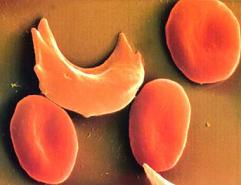 | Reverse of Sickle Cell Anemia Sickle cell anemia (visual shown at right from http://singularityhub.com/2010/06/13/bone-marrow-stem-cells-reverse-sickle-cell-disease/) is a congenital blood disorder that affects all races, but is most common in those who come from african descent. Sickle cells block small blood vessels and slow down blood flow, which causes pain, damages organs and increases the risk of stroke. For years, adults suffering from sickle cell anemia have relied on constant blood transfusions and drug treatments to keep the disorder at bay. Bone marrow transplants can reverse the disorder, however children in early stages of the disease have not been able to receive these transplants until now with the development of more successful transplants using stem cells. |
